Wednesday, 23 September 2026

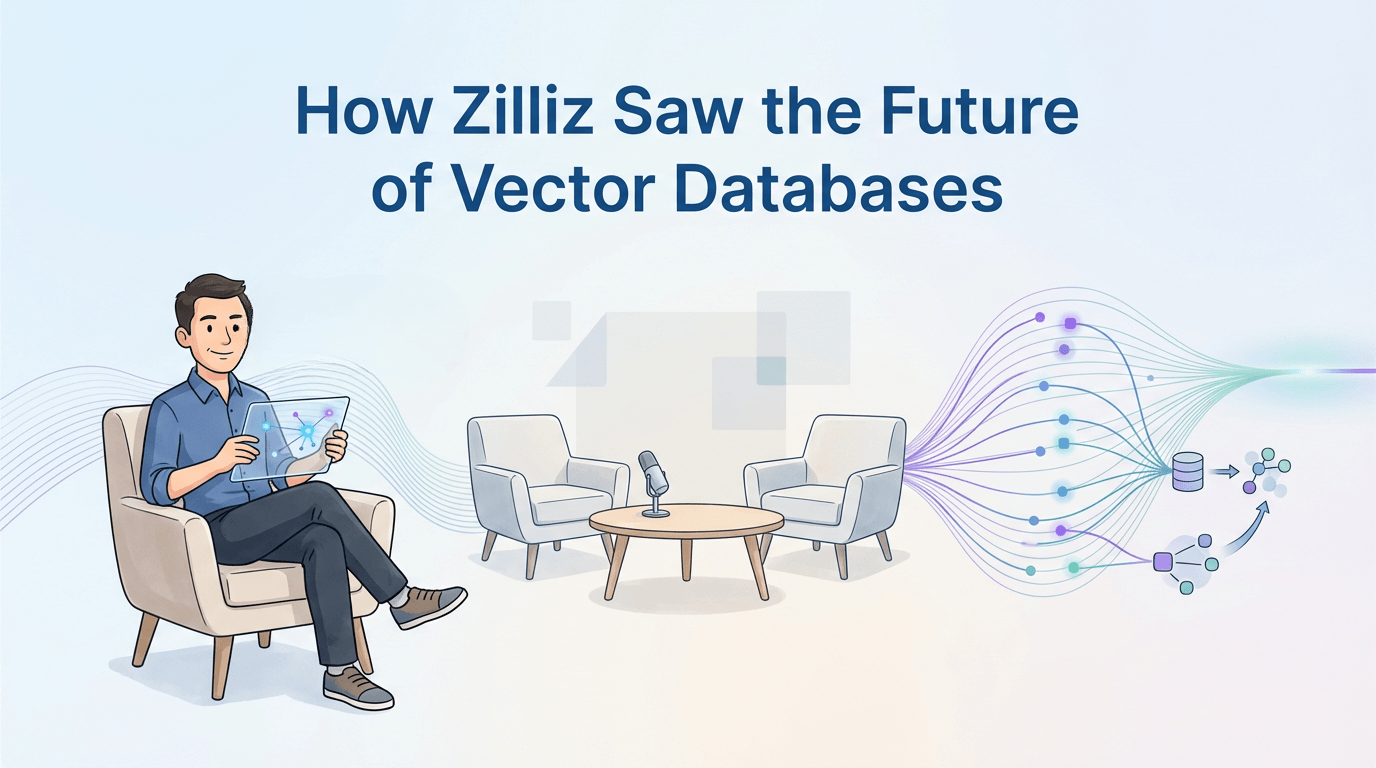
Image source: Public Domain
Zilliz, the company behind Milvus, the world's most widely adopted open-source vector database, announced the public preview of Zilliz Vector Lakebase, a major Zilliz Cloud release that pairs the production vector database with a shared, lake-native data foundation.
Vector Lakebase keeps Zilliz Cloud's real-time vector search at the core — the engine Zillow, OpenEvidence, Exa, Filevine, MiniMax, and more than 10,000 enterprises and AI teams already rely on — and extends it with three new ways to operate on the same data: interactive discovery, large-scale batch analytics, and search directly on external data lakes. The result is a single data foundation in which every workload runs against a single logical copy of the data, with on-demand and batch jobs billed only when compute is active.
"Production vector search is and will remain at the heart of what Zilliz does — it's why thousands of teams choose Milvus and Zilliz Cloud, and it's getting faster and more cost-efficient every release," said Charles Xie, Founder and CEO of Zilliz. "Vector Lakebase is what we believe comes next: one data foundation where the same vectors can serve a production query, anchor a discovery session, and power a multi-petabyte training-data pipeline — without copies, migration, or a parallel stack."
Why a Single Data Foundation Matters
AI systems are no longer a single-query retrieval problem. They run as a continuous loop — serve, learn from feedback, mine and prepare better data, then serve again — and each turn typically requires separate systems for serving, exploration, and large-scale processing. Moving billions of vectors between those systems can take days. The cost and complexity are so high that many teams skip the loop altogether, leaving valuable data retrievable but never improved.
Vector Lakebase closes that gap with a zero-copy semantic data plane on shared lake-native storage: real-time serving, interactive discovery, and batch analytics all run against one logical copy of the data, scaling from gigabytes to petabytes.
"Teams asked for a way to keep their data in one place and run very different workloads against it — from real-time agent memory to overnight semantic deduplication," said Robert Guo, VP of Product at Zilliz and one of the architects behind Milvus. "Vector Lakebase delivers that through a unified storage layer on Vortex, tiered serving for the production path, and on-demand compute for everything else."
Five Capabilities on One Foundation
Together, these capabilities let AI teams consolidate what previously required parallel always-on serving clusters and separate batch systems onto one platform — with consistent indexes, versioned data, and compute that scales to zero between jobs.