Wednesday, 09 September 2026


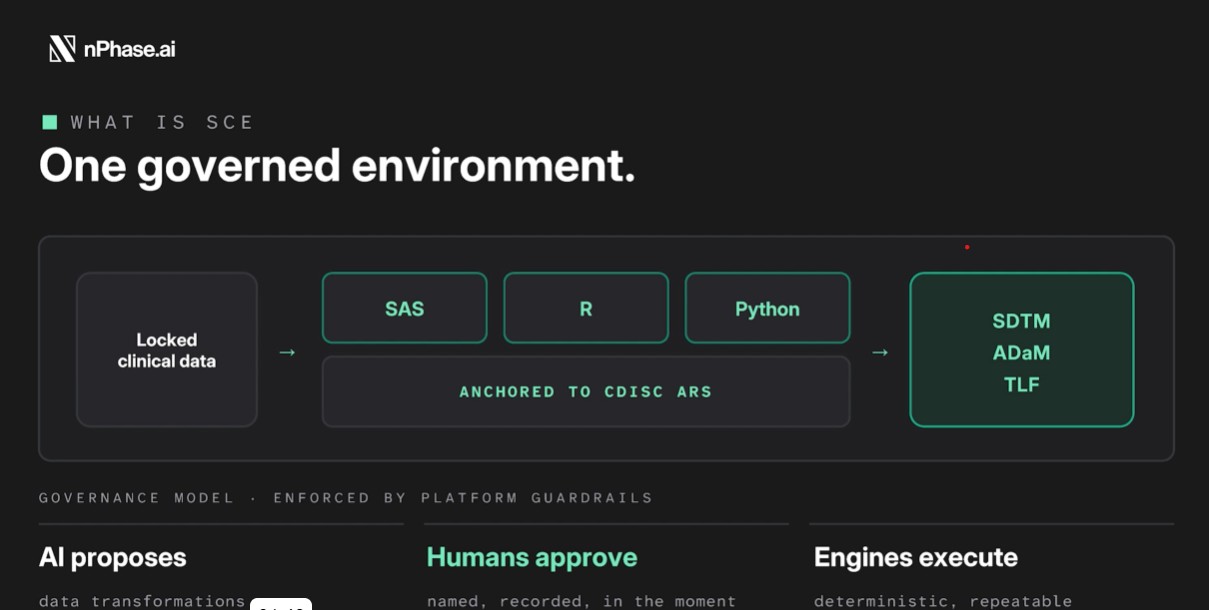
Image source: Public Domain
nPhase, Inc., the clinical research technology company known for REDCap Cloud, launched nPhase.ai, the life sciences industry’s first enterprise platform for end-to-end clinical data management. The company also introduces nPhase.ai SCE (Statistical Computing Environment). An AI-native platform built on Clinical Data Interchange Standards Consortium (CDISC) standards, the governed platform transforms raw clinical trial data into submission-ready outputs at least 4x faster with 80% fewer resources.
Clinical trial data has outgrown existing systems both in volume and complexity. A recent Tufts CSDD analysis found the average phase III protocol now generates nearly six million data points. Most of that volume arrives from unstructured data systems that were never designed to interoperate, leaving sponsors with data that is difficult to reuse or be leveraged by AI.
“Clinical data has never been more complex, with information flowing from dozens of systems, with different formats, structures, and types,” said Scott Climes, CEO of nPhase, Inc. “nPhase.ai addresses this pervasive challenge by transforming disparate clinical data into high-fidelity, harmonized datasets in near real-time, enabling faster analytics, better insights, and more informed decision-making. Now, with SCE, we are combining the speed and intelligence of AI with human oversight to make clinical data truly AI-ready from source to submission.”
nPhase.ai SCE automatically converts raw study data into the regulatory artifacts required for submission through one, governed, and traceable pipeline. It compresses a process that typically takes four or more months to weeks. Every week gained between last-patient-last-visit and submission not only accelerates treatments to patients but also gives sponsors additional market exclusivity.
nPhase.ai SCE provides the following key benefits:
“CDISC standards exist to make clinical data usable across systems and sponsors," said Chris Decker, President and CEO of CDISC. "CDISC’s transformation to Machine-readable standards is the foundation that makes automation of clinical data workflows possible. We're glad to see the industry building tools that rely on that foundation.”