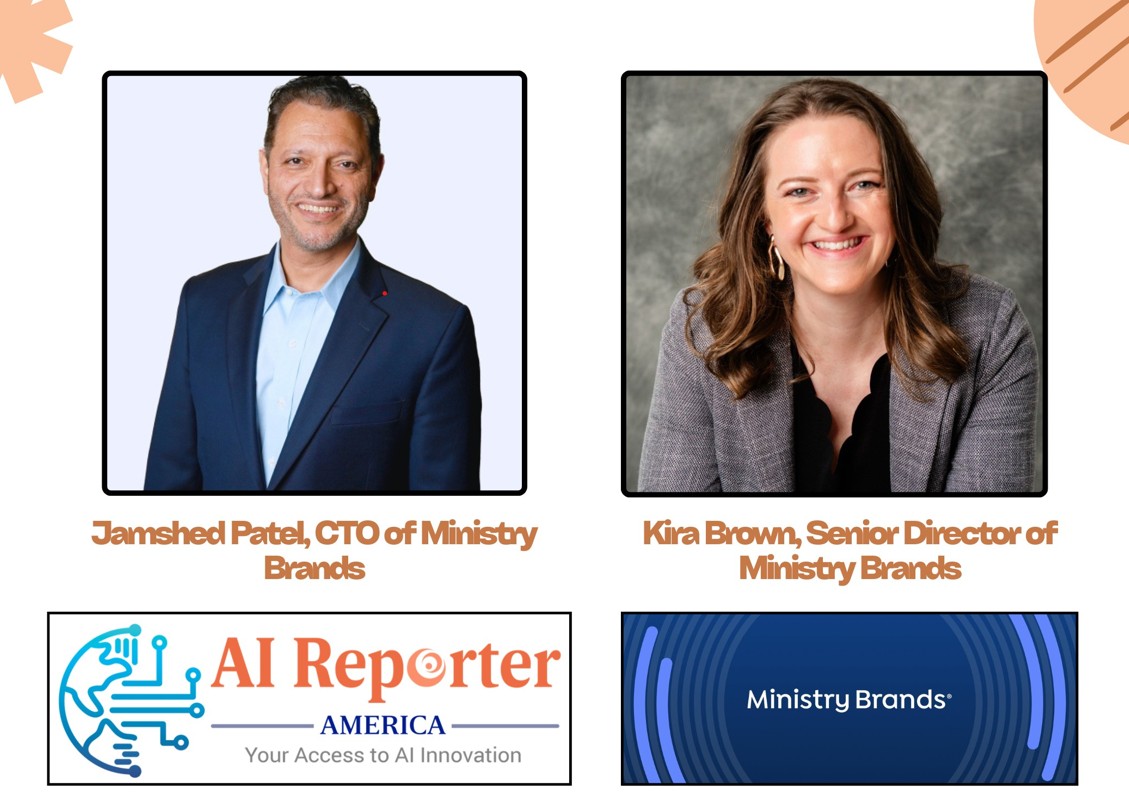
As churches seek to engage congregations across an expanding range of digital channels, pastors and ministry teams are under growing pressure to communicate more effectively without increasing administrative burdens. AI is emerging as a valuable tool to streamline ministry workflows while preserving the spiritual leadership and theological responsibility that remain central to every message. In an exclusive conversation with AI Reporter America, Jamshed Patel, CTO, and Kira Brown, Senior Director, Ministry Brands discussed how its AI-powered platform, Equip, supports the complete sermon lifecycle—from preparation and delivery to collaboration and content amplification—helping churches extend the reach of every sermon while keeping pastors firmly in control of authorship, discernment, and ministry.
1. What inspired the development of an AI platform for the complete sermon lifecycle?
Churches are being asked to communicate across more channels, formats, and languages, usually without a corresponding increase in staff or resources. A pastor may already spend 10 to 15 hours each week preparing a sermon, while communications teams, ministry staff, and volunteers then work to adapt that message into content for the week ahead.
Equip grew out of years of research and development, informed by ongoing conversations and feedback from churches about where technology could provide meaningful support without interfering with the spiritual responsibilities at the center of ministry.
We saw an opportunity to reduce the work surrounding the message without taking ownership of the message itself. That required a solution supporting the complete sermon lifecycle, from preparation and delivery through collaboration and amplification. Pastors retain responsibility for prayer, discernment, authorship, and theological intent, while ministry teams can more efficiently extend an approved message across the church.
Rather than creating more content for content’s sake, Equip reduces production burdens, extends the reach of every faithful message, and gives pastors, staff, and volunteers more time to focus on people and mission.
2. How does the platform enhance sermon preparation while preserving the pastor's authentic voice?
A pastor’s voice is more than writing style or word choice. It reflects prayer, Scripture study, personal experience, theological conviction, and an understanding of the congregation receiving the message. Those elements are central to sermon preparation and must remain in the pastor’s hands.
Equip provides support at the points where technology can be most useful. Pastors can use 12 sermon structure templates, Scripture cross-references, biblical research tools, and outlining assistance to organize their ideas, deepen their study, and develop a clear framework for the message. The platform also brings that work into a rich-text editor and Preaching Mode so the sermon can move from early preparation through delivery in one connected environment.
Equip does not independently determine a sermon’s theological substance, application, or final language. The pastor remains the author and maintains control over the message, voice, and intent. By reducing the friction of navigating disconnected tools and organizing materials, the platform preserves more time and focus for thoughtful preparation, spiritual formation, and the people pastors are called to serve.
3. What differentiates your AI platform from general-purpose generative AI tools?
General-purpose AI tools are designed for broad audiences and a wide range of use cases. They may be able to generate content quickly, but they do not inherently understand church operations, theological nuance, denominational sensitivities, or the responsibility that comes with communicating on behalf of a faith community.
Equip was built specifically around how churches and ministry teams work. It brings ministry-specific preparation, collaboration, review, and amplification workflows into one connected platform, supporting the movement from sermon development and delivery to the resources and communications that extend an approved message.
That specialization is grounded in Ministry Brands’ decades of experience serving churches and mission-driven organizations. We understand the operational realities, pastoral responsibilities, denominational contexts, and congregational trust that ministry technology must account for. Those considerations shaped Equip from the beginning rather than being added as an afterthought.
Just as important, Equip is designed around clear boundaries for how the technology should be used. It supports pastoral leadership rather than competing with it, keeping responsibility for the message and its theological intent in human hands.
4. How does AI help churches improve engagement beyond sermon creation?
A sermon is one of the most important moments in the life of a church, but its impact does not, and should not, have to end when the Sunday service concludes. Churches need ways to reinforce that message and help people remain connected throughout the week without creating an unsustainable production burden for ministry staff and volunteers.
Equip builds content from a completed, pastor-approved message, transforming it into social posts, emails, devotionals, study guides, discussion questions, short-form video clips, and multilingual content. This allows the church to maintain a consistent message across formats and audiences without asking each team to recreate the content from the beginning.
Improving engagement is not just about publishing more content; it requires greater continuity between the sermon, the conversations that follow, and the discipleship taking place throughout the week. A communications leader can extend the message across digital channels, a small-group leader can use discussion materials that reinforce the teaching, and ministry teams can adapt the same core message for the communities they serve.
These continuous touchpoints thus help reinforce in-person worship and nurture personal relationships. By reducing the production work surrounding each message, Equip gives churches more capacity for meaningful follow-up, engagement, and care.
5. How do you see AI transforming ministry and church operations in the coming years?
AI will likely become more deeply embedded in the day-to-day systems churches already use, but its value should not be measured by how many new capabilities are introduced. It should be measured by whether churches can operate more effectively, communicate more consistently, and devote more time to people and mission.
As those systems become more connected, AI can move beyond assisting with individual tasks to making useful signals easier to see. It may help surface when follow-up could be appropriate, where participation has changed, or where staff and volunteers may need additional support. Church leaders will remain responsible for understanding what those signals mean and deciding how to respond.
Over time, this creates an opportunity for churches to become less reactive and more attentive. The most meaningful transformation will not be churches becoming more automated. It will be churches gaining more capacity for presence, discipleship, stewardship, and care.
6.What safeguards are in place to ensure responsible and faith-aligned use of AI in ministry?
Responsible AI in ministry begins with a clear boundary: technology can provide insight and assistance, but it should never replace spiritual discernment, pastoral judgment, or human responsibility. Within Equip, pastors remain the authors of their sermons, and authorized church team members review and approve supporting content before it is used or published.
That human oversight is reinforced through role-based access and structured workflows that establish clear responsibility from draft through review, approval, and publication. Theological interpretation, pastoral counsel, and decisions involving ministry or congregant care remain firmly in human hands.
Equip also includes guardrails informed by church workflows, denominational sensitivities, and the distinct trust placed in pastors and ministry leaders. These considerations help define both where AI can provide meaningful support and where it should not be applied.
Privacy and security are equally important because churches are entrusted with deeply personal information. Equip operates within secure technology environments supported by data-handling protections, and sermon content is not used to train public AI models.
7. How does this platform support Ministry Brands' long-term vision for AI-enabled church technology?
Equip is one part of a broader vision for embedding intelligence across the technologies churches already use. Ministry Brands is building toward an integrated platform that supports the full range of church operations while keeping people, ministry, and mission at the center.
Within Ministry Brands Amplify, Equip serves as the content engine alongside modules for Streaming, Giving, Websites, and Communications. These connections allow churches to move more naturally from sermon preparation and delivery into the communications, resources, and digital touchpoints that extend the message.
Ministry Brands is also expanding trusted intelligence through Amplify Intelligence, which helps church leaders ask questions about giving, generate real-time financial summaries, and surface useful insights from their own secure data.
Over time, this approach can extend into other areas of church operations, including accounting, donor and member management, reporting, administration, and engagement. The goal is not to apply AI in isolated pockets, but to create connected workflows that reduce repetitive work, make information easier to understand, and help staff and volunteers act with greater clarity.