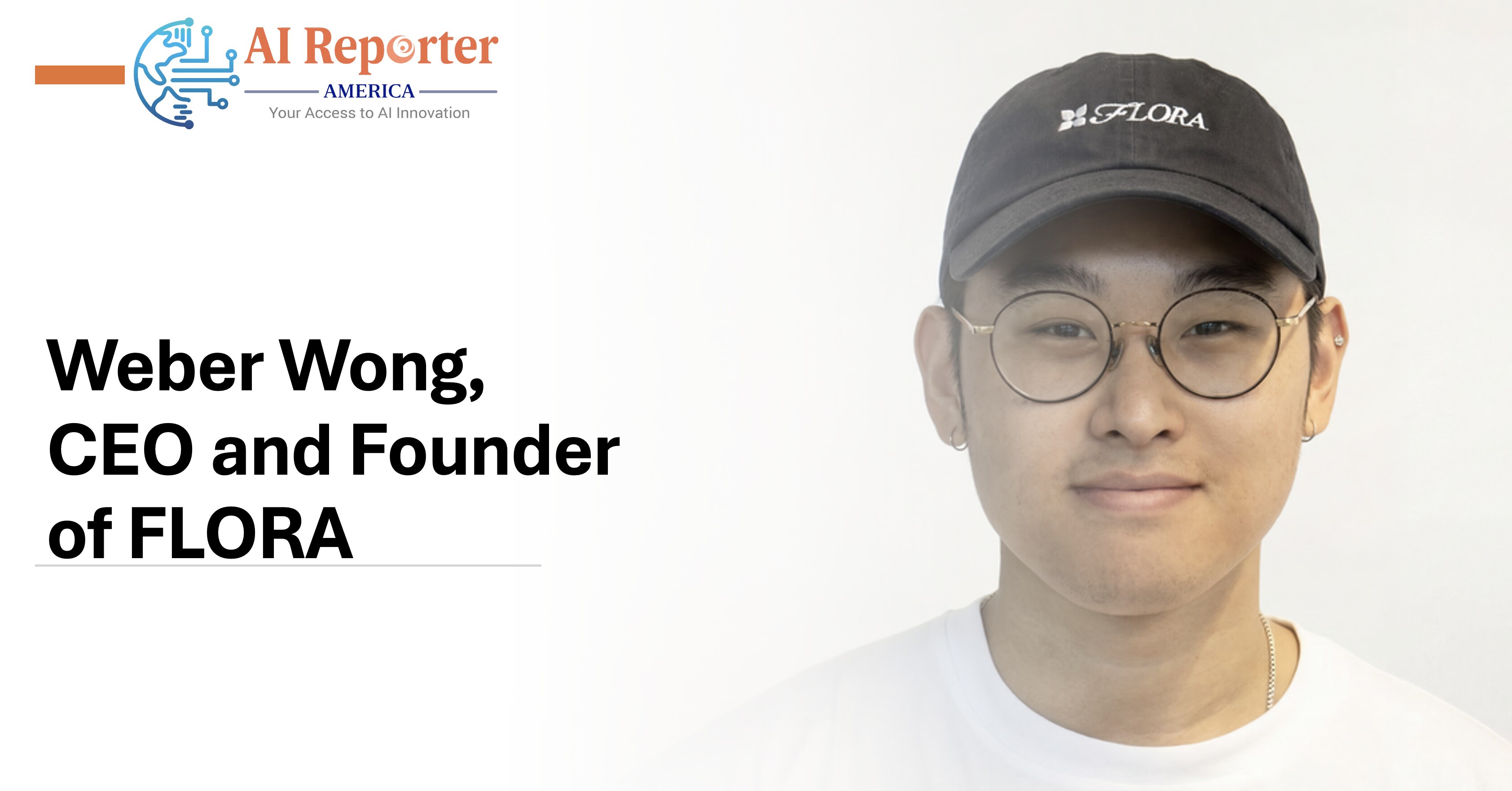
As generative AI rapidly reshapes how creative work is produced, many professional teams are discovering that speed alone is not enough. Fragmented tools, inconsistent outputs, and lost institutional knowledge are emerging as real barriers to scale and craft. In this conversation with AI Reporter America, Weber Wong, CEO and Founder of FLORA, outlines a fundamentally different approach. He shares how FLORA positions AI as creative infrastructure, why system based workflows are replacing model centric tools, and how leading global brands are using a creative operating system to protect authorship, coherence, and long term creative value in the generative era.
Why has fragmentation become one of the biggest bottlenecks in generative creative workflows, and how does FLORA’s “AI as infrastructure” approach fundamentally change this dynamic?
Fragmentation is the hidden tax on creative teams using AI today. Every new model launches with its own interface, pricing, constraints, and mental model. Teams end up juggling dozens of subscriptions, constantly rebuilding context, and re-learning tools—often for marginal gains. Worse, none of these tools talk to each other, so creative work becomes scattered across platforms with no shared system of record.
FLORA flips this by treating AI not as a collection of tools, but as infrastructure. We unify all leading text, image, and video models into a single, consistent creative environment, where outputs flow naturally from one step to the next. Instead of chasing models, teams build workflows—repeatable creative systems that persist even as the underlying models change. That’s what “model-agnostic” really means: your creative logic stays intact while the tech underneath it evolves.
How do modular, system-based workflows differ from today’s model-centric creative tools, and why is this shift critical for professional creative teams?
Most AI tools today are model-centric: you open a tool, type a prompt, get an output, and start over. That works for experimentation, but it breaks down in professional environments where consistency, iteration, and collaboration matter.
System-based workflows invert that model. In FLORA, each creative step is explicit and connected—text becomes image, image becomes video, references and constraints carry through the process. Once a workflow works, it can be reused, shared, and scaled. The creative process itself becomes an asset.
This shift is critical because professional teams don’t just need speed—they need repeatability, authorship, and control. A workflow lets senior creatives encode taste and decision-making into a system, while the rest of the team runs it safely. That’s how creative work scales without becoming generic.
FLORA is being used by brands like Nike, Levi’s, Pentagram, and Lionsgate—what specific enterprise needs are driving adoption among high-craft creative organizations?
High-craft teams adopt FLORA for three reasons: control, coherence, and continuity.
First, they need creative control. These teams can’t afford “prompt and pray.” They need to see and adjust every step of the process. FLORA’s visual, workflow-oriented interface makes the creative logic transparent and editable.
Second, they need coherence across teams and deliverables. Whether it’s a Nike footwear concept or a Lionsgate film pitch, the work has to stay stylistically consistent across formats, revisions, and contributors. Workflows make that consistency programmable.
Third, they need continuity at the organizational level. When a power user leaves, their knowledge shouldn’t disappear with them. In FLORA, workflows become institutional memory—creative infrastructure that the organization owns.
Many AI creative tools target speed and experimentation; how does FLORA balance automation with creative control, authorship, and craft?
We believe creatives don’t want to be automated—but they do want to automate their own work.
FLORA is designed so automation handles the repetitive, mechanical parts of the process, while humans stay in charge of judgment, taste, and direction. Every transformation is visible. You can intervene anywhere. Outputs aren’t the point—the process is.
This preserves authorship. A workflow shows how something was made, not just what was made. That matters for professional pride, client trust, and internal collaboration. The result is speed without loss of craft—and scale without loss of identity.
Do you see FLORA as creating a new software category, and if so, what lessons—if any—can be drawn from platforms like Adobe that defined earlier computing eras?
Yes. We think FLORA represents a new category: a creative operating system for the generative era.
Adobe defined creative software for the personal computing paradigm—layer-based image editing, time-based video editing. Those metaphors made sense when creation was manual and incremental. Generative creation is different: it’s top-down, iterative, and system-driven.
The lesson from Adobe isn’t to copy their tools, but to do what they did in their era: build the interface that makes a new computing paradigm usable for professionals. FLORA is doing that for generative computing—providing a stable, extensible layer above rapidly changing models, where serious creative work can actually happen.
Looking ahead, how do you expect generative workflows to evolve over the next few years, and what role could a “creative OS” play as models, modalities, and use cases continue to expand?
We think the next phase of generative AI is organizational, not individual.
Creative workflows will become more autonomous, more multimodal, and more deeply embedded into how companies operate. Instead of making single assets, teams will build creative systems that continuously produce on-brand work across channels.
A creative OS sits at the center of that future. It’s where creative logic lives, where models plug in and out, where teams collaborate, and where creative knowledge compounds over time. As models get better and cheaper, the differentiator won’t be access to AI—it will be the systems you’ve built on top of it. That’s the layer FLORA is focused on owning.