Friday, 23 October 2026


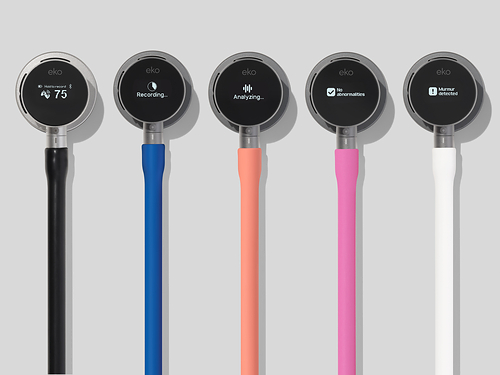
Image source: Public Domain
Eko Health, a leader in clinical AI for the early detection of heart and lung disease, announced the FDA clearance and launch of CORE 300, a new AI enabled stethoscope that combines advanced digital capabilities with traditional analog listening in a single device. Priced in line with premium traditional stethoscopes, CORE 300 brings Eko's award-winning digital technology to a much broader group of healthcare professionals.
CORE 300 delivers enhanced listening and clinical information in the moments that matter most, whether in a crowded emergency department, a loud pediatric clinic, or a rural skilled nursing facility hours from specialty care. With a twist of the chestpiece, clinicians can move instantly between familiar traditional listening and Eko's advanced digital listening technology, with up to 35x amplification, active noise cancellation, and real-time heart rate displayed directly on the device. When connected to the Eko App and Eko's FDA-cleared AI for structural murmur detection, CORE 300 can also bring AI disease detection into the physical exam.
"Millions of healthcare professionals around the world use a stethoscope to examine patients every day," said Connor Landgraf, co-founder and CEO of Eko Health. "Our goal is to bring the most ubiquitous clinical exam into the precise digital era. Once the physical exam becomes digital, we combine better listening with objective measurements and AI-powered clinical decision support right at the point of care. Eko has delivered more than 750,000 devices, and CORE 300 is the next step toward bringing early disease detection confidence to every healthcare professional."
Heart and lung disease continue to represent an enormous public health burden. Heart disease remained the leading cause of death in the U.S. in 2025, responsible for more than 694,000 deaths, while chronic lower respiratory diseases caused more than 148,000 deaths (CDC). During a routine physical exam, an abnormal heart rate, murmur, wheeze, or other change in heart or lung sounds can be an important signal that further evaluation is needed.
"For advances in early detection to reach more people, they need to become part of the care people already receive," said Jerome Adams, MD, 20th U.S. Surgeon General, Executive Director of the Center for Community Health Enhancement and Learning at Purdue University, and distinguished medical advisor to Eko Health. "Using CORE 300, what stood out to me was how much more capability it brings to a physical exam that still feels familiar. Clearer listening and more clinical information at the point of care can help clinicians recognize concerning findings earlier and make more informed decisions. That can be especially meaningful in rural and underserved communities, where the next level of care may be hours away."
"Clinical technologies are evolving quickly, from smartphones at the point of care to AI entering the exam room, but adoption depends on making new capabilities fit naturally into the way clinicians already practice," said Steven R. Steinhubl, MD, chief medical officer of Eko Health and a board-certified cardiologist. "CORE 300 bridges that gap. It preserves the traditional experience of auscultation while putting enhanced digital listening, objective measurements, and access to clinical decision support a twist of the chestpiece away. That combination can help make a smarter, more connected physical exam a routine part of care rather than the exception."
CORE 300 features include:
CORE 300 will be available beginning Oct. 22 at ekohealth.com. Following its U.S. launch, CORE 300 will roll out internationally across Canada, the United Kingdom, and select European markets, with additional countries to follow.